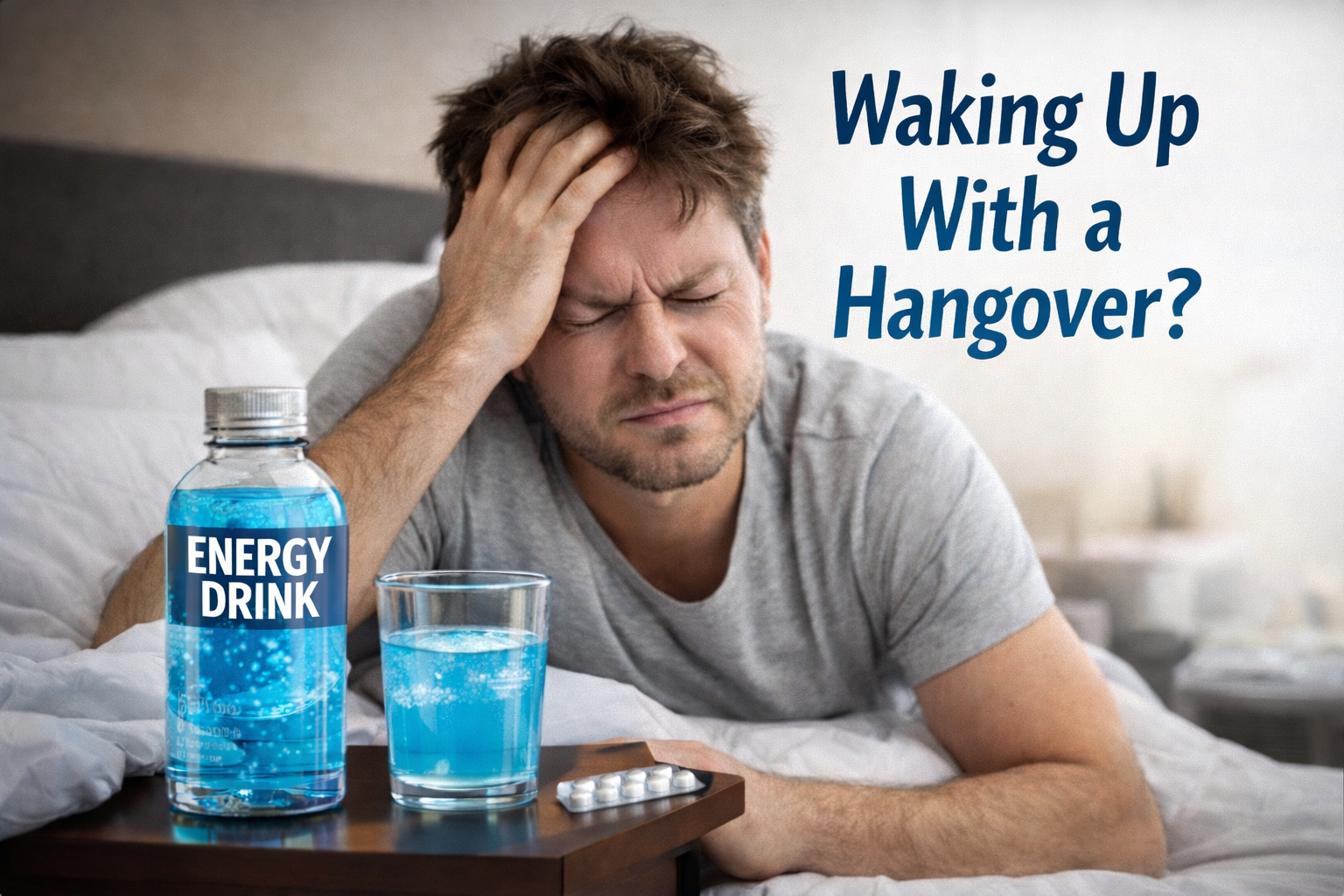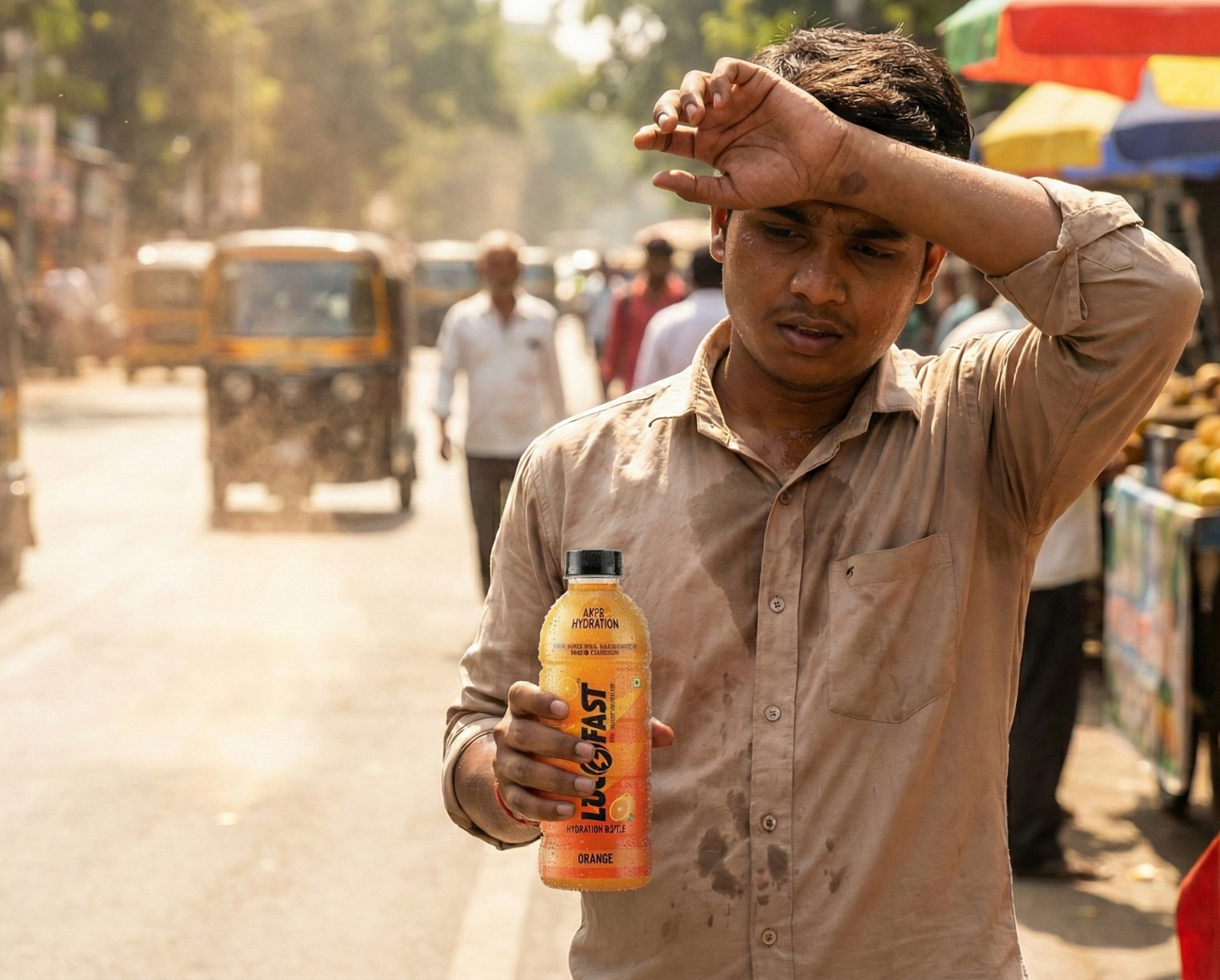


Electrolyte Drinks vs. Energy Drinks: The Honest Comparison (2026)
Walk into any supermarket in India, and the choice between electrolyte drinks vs energy drinks can be confusing. On one shelf, you have Red Bull and Sting promising “instant energy,” while on the other, you have hydration options like Lucofast. But which one does your body actually need?
It is easy to get confused. Are they all the same? Can you drink a Sting after a workout? Is Enerzal just for sick people?
If you are wondering about the real difference between electrolyte drinks vs energy drinks, you are not alone. While both promise to boost your performance, they do it in completely opposite ways. One fuels your body with science; the other tricks your brain with stimulants.
Here is the honest, science-backed comparison to help you stop guessing and start fueling correctly.
Electrolyte Drinks vs Energy Drinks: The Core Difference
To understand electrolyte drinks vs energy drinks, you must look at their primary purpose.
Energy Drinks (like Red Bull, Monster, Sting) are Stimulants. They are designed to give you a temporary “jolt” by flooding your brain with caffeine and sugar. They do not hydrate you; in fact, the high caffeine content can actually dehydrate you.
Electrolyte Drinks (like Lucofast) are Replenishers. They are designed to restore the fluids and minerals (sodium, potassium, magnesium) your body loses through sweat. They fix the root cause of fatigue—dehydration—rather than just masking it.
1. The “Energy” Source: Caffeine vs. Minerals
The biggest difference lies in how they give you energy.
Energy Drinks: The Caffeine Trap
Energy drinks rely heavily on caffeine. A single can of Sting or Red Bull can contain as much caffeine as two cups of strong coffee.
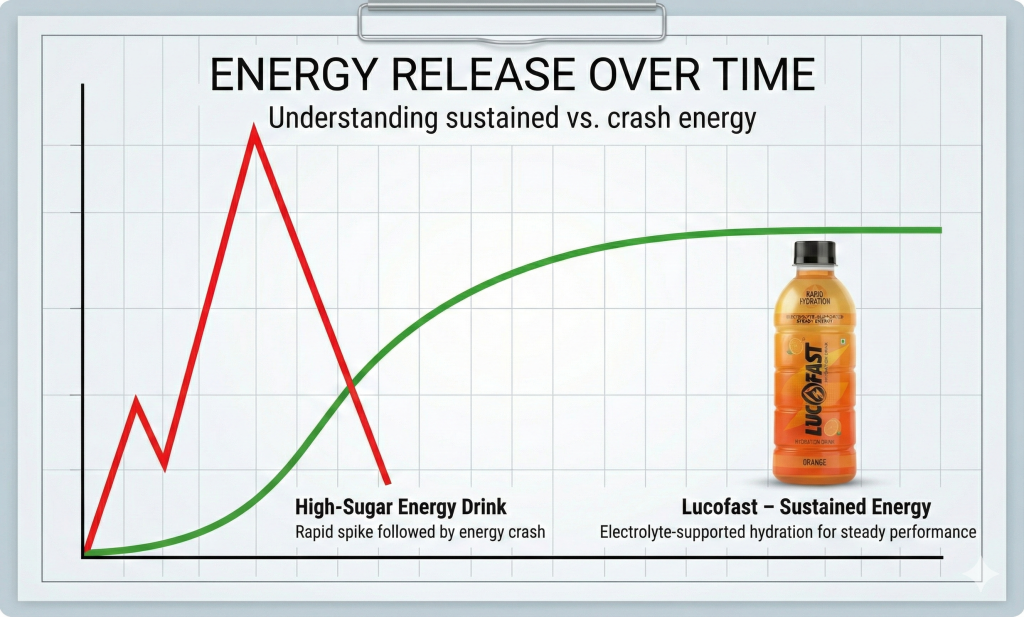
The Effect: You feel an instant “buzz” because caffeine blocks the “tiredness signals” (adenosine) in your brain.
The Downside: It is fake energy. Once the caffeine wears off, you experience a “crash,” leaving you more tired than before. Furthermore, high caffeine intake can cause jitters, anxiety, and increased heart rate.
Electrolyte Drinks: The Biological Fuel
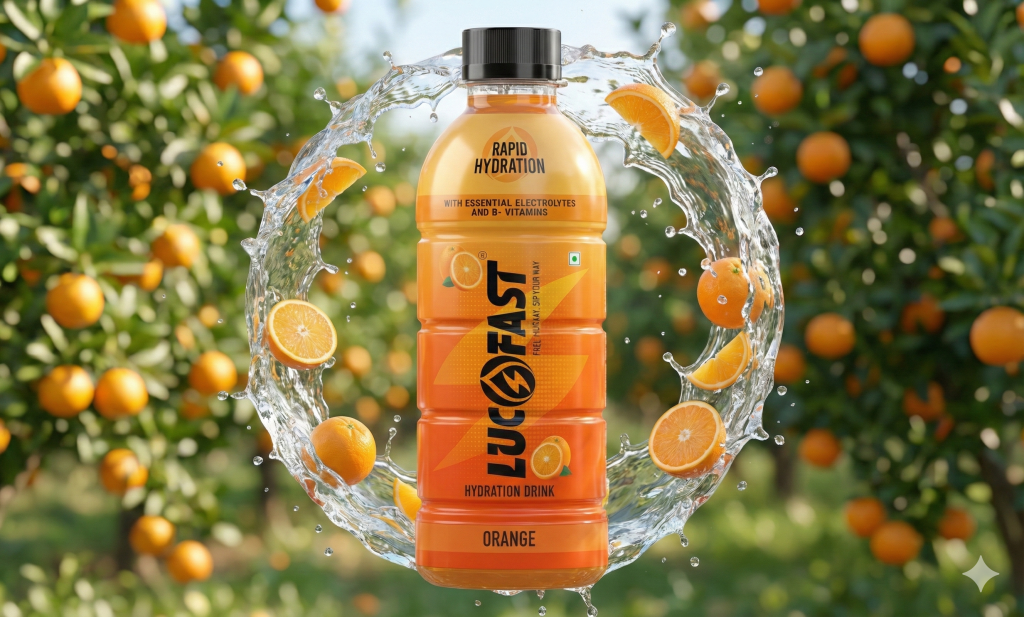
Electrolyte drinks contain zero caffeine. Instead, they use electrolytes and B-Vitamins.
The Effect: Electrolytes (like Sodium and Magnesium) help your cells absorb water, fixing the dehydration that makes you tired. B-Vitamins help your mitochondria convert the food you eat into natural, usable energy.
The Upside: You get sustained, steady energy without the jitters or the crash.
2. Sugar in Electrolyte Drinks vs Energy Drinks: The Hidden Danger
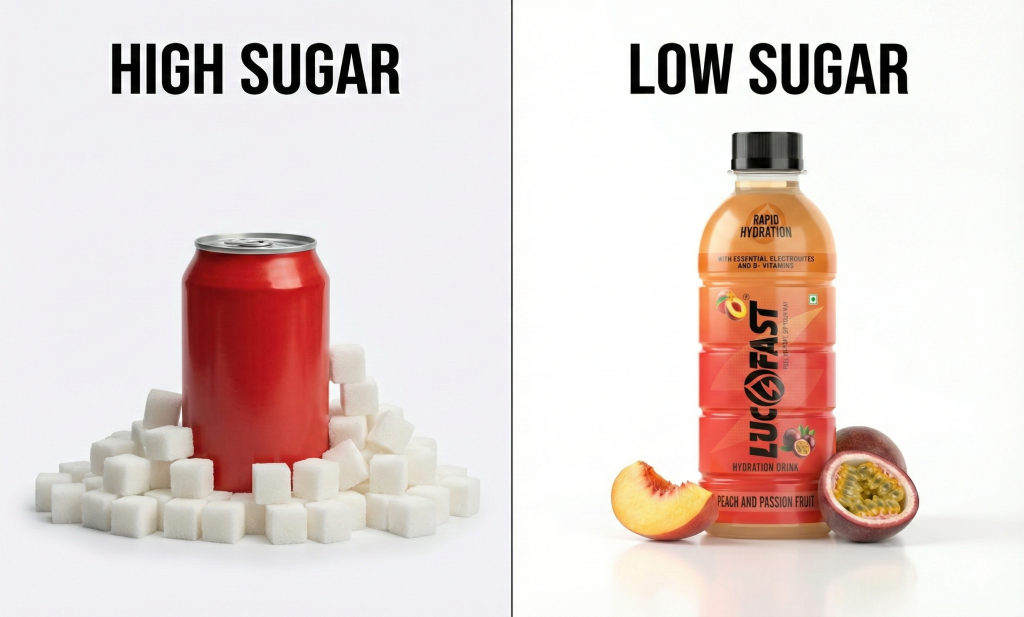
When comparing electrolyte drinks vs energy drinks, sugar is the silent killer.
Most energy drinks in India are loaded with sugar to hide the bitter taste of caffeine. A 250ml can of a popular energy drink often contains 6-7 teaspoons of sugar. This causes a massive insulin spike, followed by a condition known as reactive hypoglycemia (a sugar crash).
In contrast, modern electrolyte drinks like Lucofast are low-sugar or sugar-free. They use just enough glucose to help with sodium absorption (a process called the Sodium-Glucose Cotransport System) but not enough to wreck your health.
3. When to Choose Electrolyte Drinks vs Energy Drinks
Knowing electrolyte drinks vs energy drinks differences is useless if you don’t know when to use them.
Do NOT Drink Energy Drinks If:
You are working out: Caffeine is a diuretic, meaning it makes you pee more. Drinking Sting during a run will dehydrate you faster.
It is hot outside: The combination of heat, sweat, and high caffeine can strain your heart.
You are sitting at a desk: The sugar spike will give you “brain fog” within an hour.
Choose Electrolyte Drinks If:

You are sweating: Whether it’s the gym, a run, or just a hot Indian summer day.
You feel the “Afternoon Slump“: That 3 PM fatigue is usually mild dehydration.
You are recovering from illness: Fevers and stomach bugs drain your fluids.
You want steady focus: Magnesium and Potassium support clear thinking without anxiety.