
Skip to main contentScroll Top

10 Dehydration Symptoms (Adults, Kids & Seniors) & How to Fix Them

Medical Disclaimer: This article of dehydration symptoms is for informational purposes only. It is not a substitute for professional medical advice, diagnosis, or treatment. Always consult your doctor regarding medical conditions.

Most people think dehydration just means feeling thirsty. However, thirst is actually one of the last signals your body sends.

By the time you feel parched, your performance is already dropping. You might notice fatigue, poor focus, or even mood swings. Unfortunately, you can often trace these issues back to low fluid levels.

Modern life makes us ignore these signals. Long workdays, too much coffee, and air conditioning all cause silent fluid loss. Drinking water is a great start. However, true hydration requires a balance of electrolytes. These are minerals that keep your body running.

Below, we reveal the hidden symptoms of dehydration for adults, children, and seniors. Furthermore, we explain exactly how to fix them.

Common Dehydration Symptoms to Watch For

Dehydration affects your energy and focus long before you reach for a water bottle. Here are the clinical signs that your body needs fluids immediately.

1. The “Skin Pinch” Test (Skin Turgor)

This is the fastest way to check your hydration status. Simply pinch the skin on the back of your hand or abdomen.

  • Hydrated: The skin snaps back instantly.

  • Dehydrated: The skin “tents” or takes seconds to flatten.

Illustration of the skin turgor test showing a hand pinching skin on the back of a wrist; one side shows skin snapping back (hydrated), the other shows skin "tenting" (dehydrated).
The “Skin Pinch” (Turgor) test is a quick way to check for skin elasticity and dehydration at home.

2. Fatigue and Lethargy

Your blood volume decreases when fluid levels drop. Consequently, your heart must work harder to pump oxygen to your brain. This leaves you feeling tired, even after a good sleep.

3. Persistent Headaches & Brain Fog

Your brain is roughly 73% water. Therefore, even mild dehydration affects how you think. Losing just 1-3% of body weight in water can cause headaches and slow reactions.

4. Muscle Cramps

Cramps are a classic sign of electrolyte imbalance. You lose Sodium and Potassium when you sweat. Your muscles cannot relax without these minerals. As a result, you might feel painful spasms in your legs or stomach.
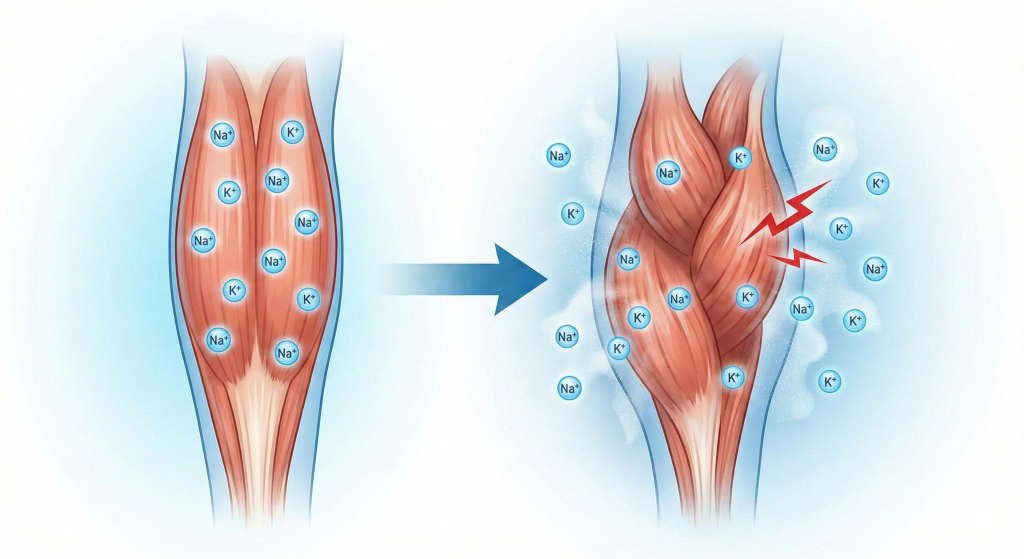
Biological diagram showing a muscle fiber in spasm (cramp) alongside sweat glands releasing Sodium (Na+) and Potassium (K+) ions.
Muscle cramps are often a sign of electrolyte imbalance (low Sodium/Potassium) rather than just a lack of water.

5. Dark Yellow Urine is the most common dehydration symptoms

Your urine color is a built-in health gauge.

  • Pale Straw Color: You are well hydrated.

  • Dark Amber Color: Your kidneys are saving water because you are dehydrated.

6. Heart Palpitations

You may feel a rapid heartbeat as electrolyte levels fluctuate. This usually signals moderate to severe dehydration.

Vertical color gradient chart displaying urine shades from clear and pale yellow (hydrated) to dark amber and brown (severely dehydrated).
Use this chart to gauge your hydration. Pale straw is ideal; dark amber signals that your kidneys are conserving water.

Dehydration Symptoms by Age Group

Dehydration looks different for everyone. What is mild for an adult can be dangerous for a child or a senior.

Signs in Babies and Children

Children have faster metabolisms, so they lose fluids quickly. Watch for these signs:

  • No tears when they cry.

  • Dry diapers for 3 hours or longer.

  • Sunken soft spot (fontanelle) on the head.

  • Irritability or low energy.

Signs in Seniors

Our sense of thirst fades as we age. Therefore, seniors often don’t feel thirsty even when they need water. Watch for:

  • Confusion: Sudden confusion is a major warning sign in the elderly.

  • Dizziness: Feeling dizzy when standing up.

  • Dry Skin: Skin that feels like paper.
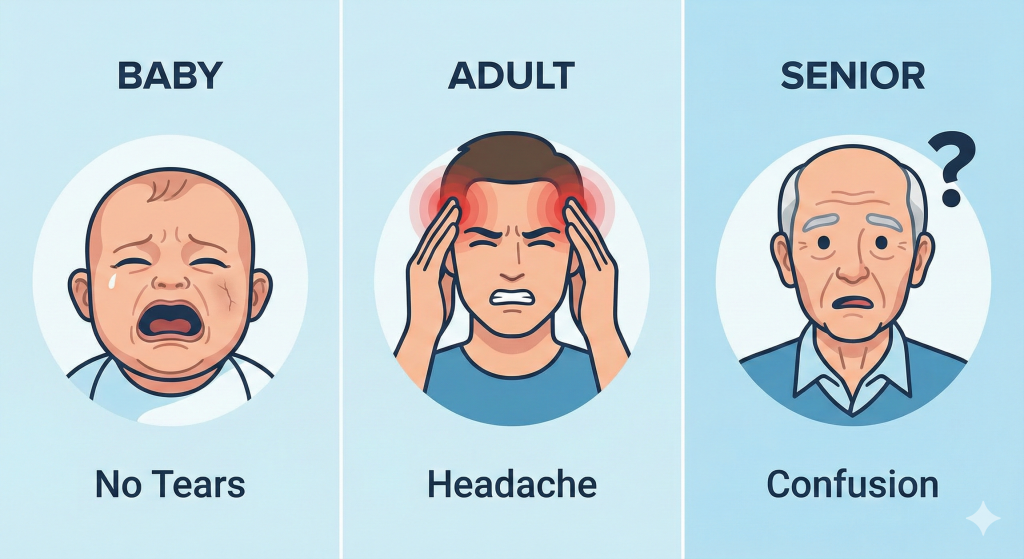
Three-part illustration comparing dehydration signs: a baby crying without tears, an adult holding their head in pain, and a senior citizen looking confused.
Dehydration looks different at every age. Watch for “dry crying” in infants and sudden confusion or dizziness in seniors.

Why Water Alone Isn’t Always Enough

You might ask, “Can’t I just drink more water?”

Sometimes, yes. However, water has limitations during active dehydration (from heat or exercise).

Water restores volume, but it does not replace lost electrolytes. If you drink too much plain water, you might dilute your blood’s sodium levels. This condition is called hyponatremia.

Effective rehydration requires three things:

  1. Fluids: To refill blood volume.

  2. Electrolytes: To help cells absorb the water.

  3. Sugar (Glucose): A small amount helps the gut absorb sodium faster.

How to Rehydrate Effectively

If you see these symptoms, follow this guide to treat them.

1. Mild Dehydration (Thirst, Dry Mouth)

  • Drink Water: Sip small amounts often.

  • Eat Water-Rich Foods: Try watermelon, cucumber, or oranges.

2. Moderate Dehydration symptoms (Cramps, Fatigue)

  • Use an Electrolyte Drink: Specialized drinks work better than water here. You need an isotonic formula for fast absorption.

  • Home Remedy: Mix water with a pinch of salt and lemon. However, getting the ratio right is difficult.

3. The Convenient Solution: Lucofast

Do you need precise hydration on the go? Lucofast is an isotonic hydration drink designed for this exact purpose.

Energy drinks rely on caffeine, which can dehydrate you further. In contrast, Lucofast replenishes 5 essential electrolytes: Sodium, Potassium, Magnesium, Calcium, and Chloride. It provides the rapid absorption of a medical solution, but it is perfect for daily use.

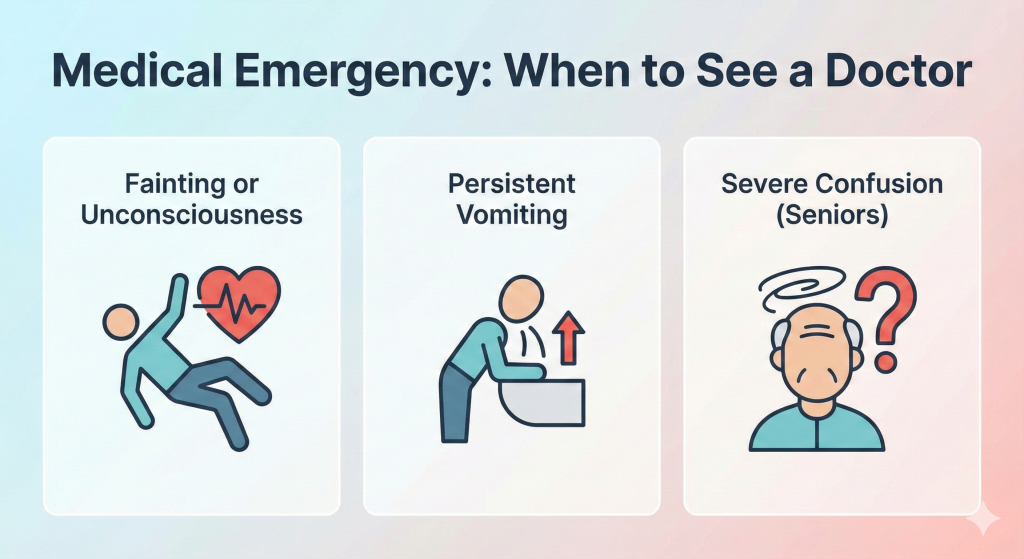
Illustration of a doctor standing next to emergency warning icons (fainting and vomiting), indicating when to seek medical help for severe dehydration.
If you or a loved one experience fainting, confusion, or inability to keep fluids down, seek professional medical help immediately.

When to See a Doctor

Please seek medical help immediately if you notice:

  • Fainting or passing out.
  • Vomiting (inability to keep fluids down).
  • Confusion or extreme sleepiness.
  • No urination for 12+ hours.

Medical Insight on Dehydration Symptoms

According to the Cleveland Clinic, dehydration symptoms include thirst, fatigue, dizziness, dry mouth, and reduced urine output, all of which indicate the body’s need for immediate fluid replacement.
Source: https://my.clevelandclinic.org/health/diseases/9013-dehydration

The National Health Service (NHS) also states that even mild dehydration can affect physical performance, mood, and concentration, especially during heat or physical activity.
Source: https://www.nhs.uk/conditions/dehydration/

FAQ Section

  • 1. What are the first signs of dehydration?

    The first signs of dehydration include thirst, dry mouth, fatigue, darker urine, and reduced focus. These symptoms can appear before severe dehydration develops.

  • 2. Can drinking water alone fix dehydration?

    Not always. Water does not replace electrolytes lost through sweat, heat, or illness, so the body may remain dehydrated even after drinking water.

  • 3. How do electrolytes help with dehydration?

    Electrolytes restore fluid balance, support muscle function, and improve the body’s ability to absorb and retain water.

  • 4. Can dehydration cause fatigue and dizziness?

    Yes. Dehydration reduces blood volume and oxygen delivery, which can cause fatigue, dizziness, and weakness.

  • 5. Are dehydration symptoms different in adults and children?

    Yes. Adults often experience fatigue and dizziness, while children may show irritability, reduced urination, or dry skin.

I research, write, and publish content for consumer brands across FMCG, beverages, wellness, and digital-first categories. With over six years of experience in brand and marketing strategy, my work focuses on simplifying complex topics like hydration, nutrition, performance, and consumer health into clear, evidence-based content that is practical and easy to understand.

Related Posts
Clear Filters

Looking for the fastest drink to rehydrate your body? Learn how electrolyte hydration works, why water alone may not be enough, and how hydration drinks like Lucofast support rapid rehydration and sustained energy.

Discover the best drinks for sustained focus and energy during workouts and workdays. Learn how hydration drinks with electrolytes and vitamins support productivity.

Leave a Reply

Your email address will not be published. Required fields are marked *

  • Rating

This site uses Akismet to reduce spam. Learn how your comment data is processed.